
sassykg • July 6, 2020

Every year, rain or shine, on July 1, Canada commemorates the anniversary of Canadian Confederation when three separate colonies of the Province of Canada united to become the Dominion of Canada. Canada Day, often called Canada’s birthday, is traditionally celebrated with parades, fireworks, barbecues and fairs. Sadly, this year, the Covid pandemic restrictions halted all such large public gatherings. My husband and I celebrated alone at our summer lake home, eating barbecued hamburgers and McCains french fries. Since we were not enjoying our usually active Canada Day, I decided to reflect on some distinctive Canadian characteristics.

For many Canadians, there are a multitude of uniquely Canadian symbols, sayings, and pastimes of which many of us are staunchly proud. Some underscore our culture, others celebrate our inventions, a few emphasize our accents, others are just plain silly and one is a revered and an almost sacred institution. Let me share a few examples that stand out for me.

Our monetary system is something that distinguishes us from many other countries. In 1987, we gave up our dollar bill (ostensibly to save money) and traded it for a gold coloured coin emblazoned with a solitary loon. Never ones to be subtle with our terminology, the national coin quickly became commonly called “the loonie”. I guess the cost savings were substantial enough that almost 10 years later (god forbid we make a hasty decision!) the toonie was born. The first cousin to the loonie, the toonie features a polar bear and replaced the few two dollar bills still in existence at the time. It seems it was too difficult to come up with a catchy name that captured the polar bear emblem. So toonie it was. After all, it is a two dollar coin and perhaps more importantly it rhymes with loonie!

On the lighter side of things, there are some distinctly “Canuck” idioms that most of the world would need to have interpreted. Here are a few of our more quirky ones:

Canuck – a Canadian citizen
Two-four (or two-fer) – a case of 24 beer
Kerfuffle- a big commotion caused by an argument
Double Double – a coffee available only at Tim Hortons (a Canadian Starbucks) so important that it is made available to our troops in Afghanistan

As far as I am concerned there is no distinguishable Canadian accent but my American friends beg to differ. Apparently I, and countless other Canadians, pronounce the word “about” with something that sounds akin to “aboot”. Ok, I will reluctantly concede this. However, there is one word that is undeniably etched in my vocabulary. I have no idea how this interjection became part of our national expression but I have to agree with the google search that says it is “used to indicate that you don’t understand something, can’t believe something is true or if you want the person to respond.” I am sure you understand-EH!

Another stereotype attributed to Canadians is our predisposition to politeness. Thank you and again let me say thank you to all who have observed this national characteristic whether correct or inaccurate. I know first hand that Canadians are capable of rudeness but would likely ask to be forgiven for it. Sorry, sorry!

Although we may beg forgiveness even when likely not required, we do not apologize for our Canadian inventions – some that might surprise you. Many are sports related like basketball, lacrosse, 5 Pin bowling and the hockey goalie mask. Ask any Canadian about the origin of ice hockey , you will be told with confidence that Canada is its birthplace. It most certainly has become our national sport.

Growing up in Canada, almost any Canadian, male or female from my era is assured of understanding this phrase and it’s accompanying musical introduction: Hockey Night in Canada! This regular Saturday night Canadian sports broadcast was either greeted with delight (mostly by males) or disdain (mostly by females). The teenage guys I knew were interested enough in the opposite sex to ask for a Saturday evening date. But it could never begin until after Foster Hewitt, the commentator, bid goodnight to the fans. In Winnipeg, where I lived, that was most often a late start. There is only so much time a girl can spend under that plastic hair dryer bonnet!!

My family and I have several connections with the hockey world which includes a hockey franchise owner and cousins and friends who have played in the NHL. A recent story can help illustrate how challenging playing hockey can be during the Covid crisis. A former NHL er (who shall go un-named but was the last person to play without a helmet!) has been working in a Scandinavian country as a general manager and coach. Away from his family for at least the last four months, our friend was scheduled to come home for 3 weeks, knowing he had to commit to 2 weeks self-isolation. Two days ago he was on the phone to his wife as he stood at a Swiss train station, ready to get to the airport. Another call interrupted their conversation. Here is what my girlfriend texted about the call he received:

“This is our life… I have a blog for you Kathy. Craig got a call from the team president as he is waiting for his train to Geneva. He tells Craig that he’s heard that now anyone arriving from out of the country will have to quarantine for 10 days- meaning it would be too tight for Craig to come home… as he is telling me this, we hear his train leave the station …Without Craig!!”
My friend is now heading to Switzerland next week to see her husband who says it is considered “essential travel!”
Gotta love Covid – EH?

Now I grant you that Hockey Night in Canada has long since (pre-Covid) morphed from the traditional single-game broadcast on Saturdays to multiple games being aired throughout each week. Add the fact that the original six team league currently boasts 31 teams, and only seven are in Canada, one could say that Hockey Night in Canada may have lost relevance. However, I believe the significance of the popular weekly broadcasts has not been abandoned, evidenced by the NHL’ s current and valiant attempt to complete playoff games that lead to the Stanley Cup. The logistics involved boggle the mind. Testing, quarantining, organizing accommodation are just a few. But one thing I can say with confidence: the long-standing Canadian love affair with hockey will continue through this pandemic. “He shoots he scores” will be heard for years to come.

Here’s to Hockey Night(s) in Covid! And thanks for reading. Sorry if I may have offended!!


is loading comments...

Sassy Blog

By K Grieve November 25, 2025
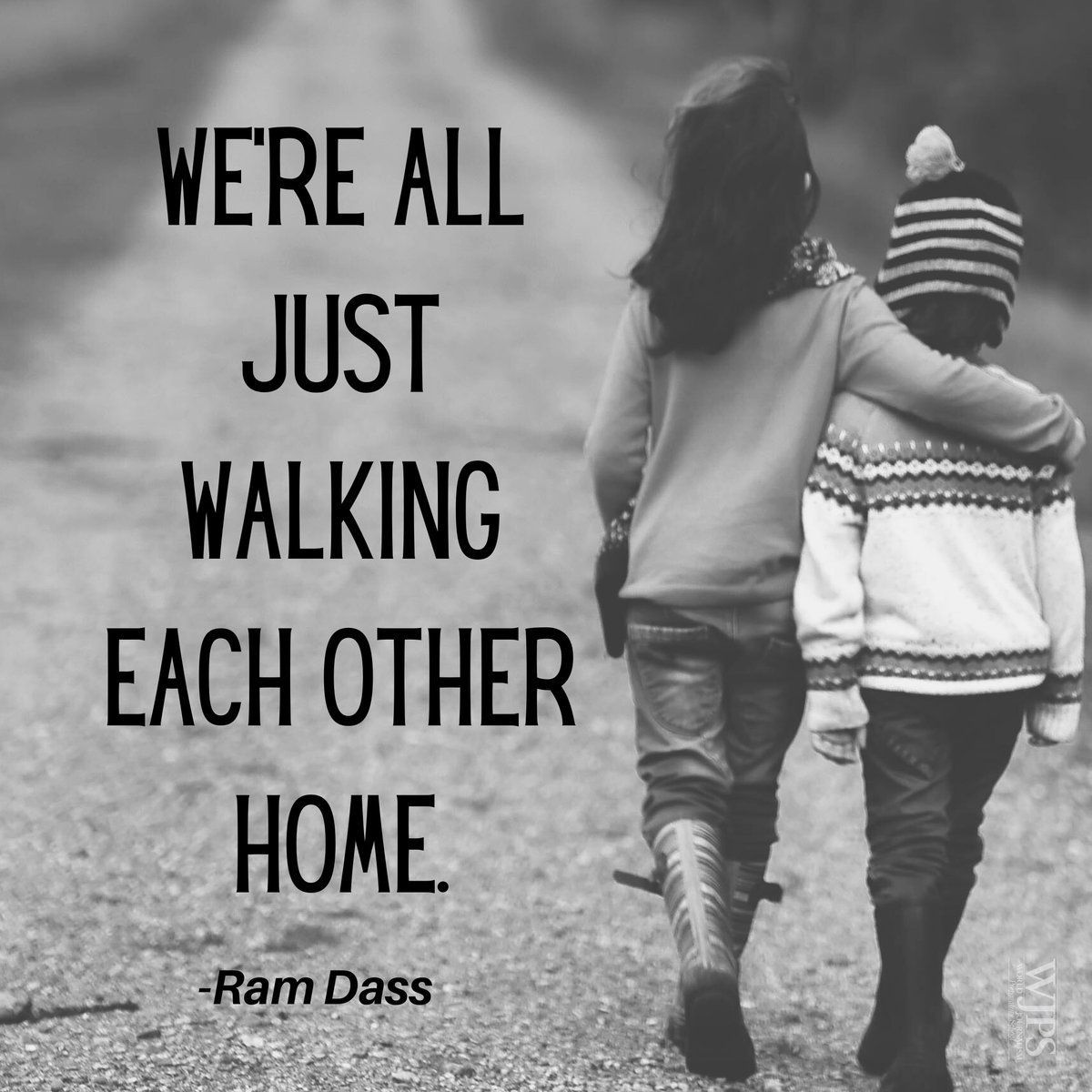
A Note Before You Read Before you read this post, I want to offer a small warning. This piece isn’t my usual stroll down memory lane or a lighthearted SassyThoughts remembrance. It enters an area that is heavier, darker, and far more unsettling than what I typically share. It’s a story that has frightened me, and left its mark in ways I didn’t understand at the time. It’s a story about murder! If you prefer the gentler reflections, feel free to skip this one. But if you choose to read on, just know you are following me into a memory that is chilling. ……………………………………………………………………...................................................................................................... Death has always scared me. That realization did not come gently. It arrived harshly! It scared me even before I fully understood it. The fear of death was planted in me in grade two at St. Patrick’s Parochial School in Victoria, B.C. Sister Mary Doleena, my favourite teacher, told us that Jesus died on the cross to save our immortal souls. I remember the way sister said “died”. It seemed so final and I wanted it to go away. The idea of a man suffering, bleeding, nailed to a wooden cross filled me with dread. Even at seven, something in me resonated: death is real, and none of us can escape it. Years later, when I was nine, I met a girl riding her bike with a printed scarf on her bald head. I told my mother I met a new friend but that she always wore a scarf tied tightly around her head. None of her hair was showing and I wondered why? My mother explained that she knew that my friend had cancer, a cruel disease that could take her life. Another snapshot on death. But nothing-absolutely nothing-prepared me for what happened in September 1975. The memory still comes hauntingly back, stirring feelings I thought I had long forgotten. I was newly separated, living in a small slanted-floor house in Winnipeg with my one-year-old son, Noah, and my friend Jill. I was working in an Affirmative Action program called New Careers, which helped mostly indigenous adults (many from small communities and / or reserves in Manitoba) to find employment after receiving two years of job training. Jill and her colleague Marilyn taught at an inner-city “alternative” school called Robertson House; it was stressful, challenging work. The school’s aim was to help kids whose challenges prevented them from success in a typical public school. Marilyn lived a few blocks away from us in an older two-story home with a veranda and creaking floors. She lived alone, but had a boyfriend named Mike who was a fellow teacher at the school where she taught. She was separated from her husband, who, as I recall, lived in Winnipeg. Every school-day morning, Jill was picked up by Marilyn and the two of them made their way to Robertson House. They were not only coworkers, but also good friends. One evening, the teaching staff from Robertson House met in my living room for their first meeting of the year. It seemed like it was a positive and productive meeting, and I came home just as the group was leaving. Marilyn was smiling as she slipped on her jacket. I had no idea it would be the last time I’d ever see her alive. The next morning, as usual, Jill was waiting to catch a ride with Marilyn outside our front door. I had taken Noah to daycare and came back home to get ready for work. I was very surprised when Jill burst through the front door, shaking. “Marilyn has not picked me up; I went by her house and the back door is ajar.” she said as she trembled. “Something there isn’t right,” she said. Her face was tense and her eyes were wide. There was something in her voice, cold and fearful, that made my stomach heave. I said “We’ll go together and see what is happening.” I grabbed my green winter coat and the two of us flew out of the house. We ran the few blocks to Marilyn’s home, the early fall air stinging our cheeks. The neighborhood was so quiet. There was no wind, but we felt a chill in the air. When we reached Marilyn’s yard, her back door menacingly hung open. Inside, the kitchen felt wrong. The kind of wrong that felt eerie. Her cat was licking at food on the counter, but the air was too still, too heavy. We called her name. ‘Marilyn, Marilyn!” No response. We climbed the narrow stairs slowly. Me first, Jill behind, each step creaking loudly, like a warning. At the top of the landing, I looked into the master bedroom. And the world stood still. Marilyn was face down on the bed. Blood everywhere: splattered, pooled, smeared in a way that instantly told me something horrific had happened here. A metallic smell filled my nostrils. My body froze and then I shook with a terror I had never felt before. The grisly image before me was soon to be etched into my memory forever. For a moment neither Jill nor I could breathe. Then instinct took over. There was a rotary phone mounted on the stair landing. I heard myself shout, “Jill! Call 911!” Jill’s hands were trembling. She fumbled as she attempted to dial. She was sobbing, unable to get a number to turn fully around the wheel. “Give it to me!” I yelled, grabbing the phone from her. When the operator answered, the words tore out of me: “We’re at our friend’s house. She’s face down on the bed. There’s blood everywhere!” My voice sounded like it belonged to someone else. I can still feel that moment: the cold air burning my lungs as panic washed over me. The knowledge that death wasn’t an idea anymore was real. It had a smell. It had a presence. Totally panicked, Jill and I stumbled down the stairs, nearly tripping over each other, and we burst out the front door. I remember propping open the screen door, as if to allow air to cleanse the atmosphere. We ran all the way to the boulevard and stood there shaking, looking up and down the street as if the police could somehow save us just by arriving fast enough. A young policeman arrived alone, and asked me directly “Is she dead?” “I don’t know, I didn’t check,” I said nervously. We waited on the lawn as the young officer entered the house and ascended the stairs. A few minutes later, he came back down, shaking. He took our names and our address, and told us to go home-despite the fact that this was now a crime scene, and we were the only witnesses. Jill and I clung to each other as we made our way back to our house. Could the murderer be someone we knew? What if we were next? We climbed the steps up our porch and, terrified, we crept into our house. I rushed to the kitchen and grabbed the biggest knife I could find. Together, we moved from room to room, checking every corner, hoping that we found no one waiting for us. Luckily, no one was there, and we were free from danger. The young officer from the crime scene gave our address to two detectives that then showed up at our house. We were put into their vehicle and taken down to Winnipeg’s downtown station, and put into a little windowless room for questioning. As we waited to be interviewed, next door we could hear the sobbing of Marilyn’s boyfriend Mike as he was questioned about Marilyn’s death. The details sickened him, and we could hear the sound of him vomiting through the walls. In the days that followed, the truth of what happened to Marilyn emerged, and it was more terrifying than anything I could have imagined. Marilyn and her ex-husband had taken in a troubled teenaged boy called Allen, as a kind of foster child. They wanted to help him find stability, structure, and hope-things his troubled life had never offered him. While living with Marilyn and her husband, Allen worked a paper route, but instead of delivering to his customers, he began stealing their subscription money. Marilyn discovered what he was doing and felt it her duty to “rat him out.” She did what any responsible adult would have done: she reported him. The consequence for young Allen was swift. He was sent to a rough youth detention centre in Saskatchewan. The environment there was harsh and punishing. At fourteen, anger overtook him and he directed that anger at Marilyn. A few years later, Allen escaped the detention centre, and he came straight back to Winnipeg. Not to find help. Not to start over. Maybe not even to seek vengeance. Maybe just to steal whatever he could? Regardless of the motivation, the end result was brutal. In the early hours of that September morning, in the quiet of her home, he beat Marilyn to death with a hammer that belonged to her. Did she stumble upon him as he was stealing from her? We will never know. Regardless, the brutality of it is unconscionable. The combination of his tough youth and the kindness of the victim is almost too much to comprehend. Even now, the senselessness of it all sits heavy. Marilyn had opened her door to him, and he repaid her with a violent death. Knowing this didn’t lessen the horror of what Jill and I found that morning. If anything, it deepened it. The unpredictability of a human who is consumed by rage is overwhelming. Marilyn’s decision to report Allen to the authorities led to her tragic death. Frightening memories are difficult to suppress. While this is an unusual experience for most people, I believe it’s worth sharing. Writing this particular blog entry has brought back a traumatic experience-one that is both a unique and terrifying-yet this is still an experience and a memory that I have lived through. Is it cathartic? I hope so. As we age, death creeps closer. It is not an illusion but is something inescapable. People say the runway gets shorter, and it does. But Ram Dass said it best: “We are all just walking each other home!” Some of us stumble. Some vanish suddenly. But the rest of us keep on walking, because in the end, that’s all any of us can do.
By K Grieve October 20, 2025
The Way We Were Inspired by a piece called “We are the Bridge” We baby boomers have lived through more change than perhaps any generation before us. Born into a world of black-and-white televisions and handwritten letters, I, like most “boomers,” oddly find myself checking facts on Google, ordering everything and anything online, and FaceTiming my grandchildren from the dock at our lake place, Alexander Point. Most of us “boomers” are well past our 60s and have maneuvered technological change and societal upheaval. We have lived through a century of change - all condensed into one lifetime. We began in an age when milk was delivered to the door, phones were attached to walls, and families gathered around the evening news. Now we live in a world where our grandchildren carry the universe in their pockets and talk to digital assistants as if they were family. I grew up in a Catholic family in Winnipeg, where the rhythm of life followed the church bells — Mass on Sundays, confession on Saturdays, and a firm belief that nuns had eyes in the back of their heads. Faith was as much about community as it was about doctrine; it shaped how we showed up for one another. Even now, I hold on to the parts that speak to compassion, social justice, and the quiet sense that we’re all meant to look out for each other. In those days, Winnipeg felt both small and vast. The kind of place where most everyone in your neighborhood knew your last name and where you were on Friday nights. Summers meant escaping the city and heading to the many magnificent Manitoba lakes or where those of us without lake access went to the free admission community swimming pool. We learned to swim, meet with friends, ride bikes, play tag, and stretch the days long past sunset. It was a world without screens or schedules. Time felt good. Then life accelerated. We watched Kennedy promise the moon and for Man actually get there. Women, including many of us, symbolically burned their bras and then stepped confidently into new careers and public life. We typed on manual typewriters, progressed to IBM Selectrics, and eventually learned to “click send.” The first time I used email, I remember thinking it felt unreal - a letter that didn’t need a stamp. We’ve seen family life reinvented, gender roles rewritten, and communication transformed from handwritten letters to emoji-laden texts. We remember when a photo meant developing film and waiting days to see if it “turned out.” Now we can take a dozen shots before breakfast and (my personal favorite) delete the ones that don’t flatter. Now, my grandchildren can find anything with a swipe of a finger, and they ask Siri questions we used to save for the Encyclopedia Britannica. When they show me how to work a new app or laugh that I “still type with two fingers,” I remind them that my generation invented the personal computer, the protest march, and the peace sign - we’re hardly “not with it.” We watched Elvis shake his hips, Kennedy inspire a nation, Martin Luther King Jr. dream, the Beatles redefine music, and Neil Armstrong “Take one step for man, one giant leap for mankind.” We questioned authority, protested wars, fought for rights, and then, almost without noticing, became the authority. And then, the impossible happened: our Dick Tracy dreams came true. We once giggled at that comic-strip detective talking into his wristwatch; now our Apple Watches tell us when to stand, remind us to breathe, and nudge us toward our daily steps. How were we to know that Maxwell Smart’s shoe phone was a precursor to today’s iPhone? Technology, once the stuff of fantasy, has become as ordinary as brushing our teeth. What amazes me most is how the threads of then and now connect. At Alexander Point, our summer retreat, I watch my grandchildren leap off the dock, their laughter echoing across the water just as mine once did when leaping into the community pool. Different time, same joy. They may post their memories instantly; I write mine down and shape them into stories, but it’s the same impulse: to remember, to share, and to belong. We baby boomers are the bridge between worlds - from the catechism to the cloud, from handwritten letters to video calls, from milkmen to meal kits. We carry the past in our bones and the future in our hands. And standing on that bridge, with a grandchild’s hand in mine and the summer wind off the lake “ruining” my hair, I can’t help but feel grateful to have lived through it all - the slow and the fast, the sacred and the digital, the then and the now. We may not dance like we once did, but we still know all the words to the songs that shaped us. We may scroll slower than the younger generation, but we still want to know what’s happening in the world…and if we pause to reflect, as boomers tend to do, we realize how lucky we are to have witnessed humanity stretch, stumble, and soar. Our phones, those sleek rectangles that never leave our sides, are more powerful than the computers that sent astronauts to the moon. We once shared one rotary phone in the kitchen, its long, twisted cord stretched around corners so we could whisper secrets. Now we carry the world in our pockets and see our grandchildren’s faces light up in real time, oceans away. Then the Internet showed up! What a game changer! It linked the world in ways we could hardly have imagined, making libraries, classrooms, and newsrooms just a click away. It amplified voices that often went unheard and opened up a world of knowledge, opportunities, and connections. But along with these benefits came a lot of noise — misinformation, division, and a constant stream of opinions. We gained immediate access to a wealth of information, yet sometimes lost that essential quiet space needed for reflection. Despite its contradictions, the Internet has transformed how we communicate. It brought us closer together and broadened the horizons of what we could learn — as long as we choose wisely about what we pay attention to. Worse still, the Internet gave cover to cruelty. The anonymity of the Internet seems to grant some people license to say things our generation would never have tolerated in public. We were taught to bite our tongues, to disagree without tearing someone down. Today, behind screens and usernames, too many speak without kindness or consequence. It’s a loss of civility that still startles me - how easily respect can evaporate when faces are hidden. It’s shocking to witness how quickly respect can vanish when people aren’t face-to-face. Even shopping has transformed from an errand to an algorithm. I remember the thrill of department stores - the clatter of hangers and the excitement of the Sears’ Christmas catalogue arriving in the mail. Today, a few taps on Amazon, and a box appears at the door by morning. I still find it astonishing- and a little sad - that convenience has replaced conversation. A. nd somewhere along the way, waiting disappeared. We used to line up at the bank on Fridays to cash our paychecks, and at McDonald’s to order a burger and fries that actually took a few minutes to cook. Now, we get restless if a website takes more than three seconds to load. Groceries arrive within hours; packages appear the next day. What once felt like luxury is now expected. We’ve become so accustomed to immediacy that patience, once a virtue, is now a shortcoming! And along comes Artificial Intelligence— this strange, brilliant new frontier. It writes, paints, answers questions, even mimics voices. Part of me is amazed: after all, it’s just another step in our long dance with progress. But another part wonders what happens when machines begin to “think” faster than we do. Will curiosity fade when answers come too easily? Will we forget how to reflect, to wrestle with ideas, to linger in uncertainty - the very things that make us human? Will one of my protégés marry an AI creation? Yet, through all of it, faith, family, technology, and time, one truth endures: connection. Whether through handwritten letters or instant messages, church basements or Zoom calls, it has always been about reaching out, holding on, staying close. The Wi-Fi at Alexander Point is often spotty, but the sunsets never fail. I watch my grandchildren leap off the “bouncy thing”, their laughter carrying across the water. I remember jumping off the cracked concrete dock that my in-laws had at their cozy cottage at White Lake in Manitoba. My grandchildren post their memories instantly; I write mine down and shape them into stories. But it’s the same impulse— to remember, to share, to belong. We baby boomers are the bridge between worlds - from catechism to cloud, from rotary dials to smartwatches, from handwritten notes to emojis. We carry the past in our bones and the future in our hands. And standing on that “bridge” with a grandchild standing beside me and the lake spread before us, I can’t help but feel grateful for the slowness that shaped us, and the speed that still surprises us.